The Zebra puzzle and how to solve a logic grid
The Zebra puzzle describes five houses in a row. Each house is a different colour and is lived in by a person of a different nationality, who drinks a different drink, smokes a different brand of cigarette and keeps a different pet. A list of clues links these together, and at the end come two questions: who drinks water, and who owns the zebra? Neither water nor the zebra is mentioned in any clue, which is the puzzle’s best trick. You can only reach them by filling in everything else.
The best-known version was printed in Life International on 17 December 1962. It is often credited to Albert Einstein, and sometimes to Lewis Carroll, but there is no evidence that either of them wrote it.
How the clues fit together
Most of the clues pair two facts about the same house, such as “the Englishman lives in the red house” or “the Spaniard owns the dog”. These are the slowest to use, because on their own they do not say which house they are talking about. A few clues fix a position outright, and a few more relate neighbouring houses. Those positional clues are where to start.
In the 1962 puzzle, the Norwegian lives in the first house, milk is drunk in the middle house, and the Norwegian lives next to the blue house. Put those together and something is already settled. The first house has only one neighbour, so the blue house must be house 2. Three facts are placed before you have used a single pairing clue, and each of them removes options elsewhere: the Norwegian does not drink milk, and the Norwegian’s house is not blue.
Drawing the grid
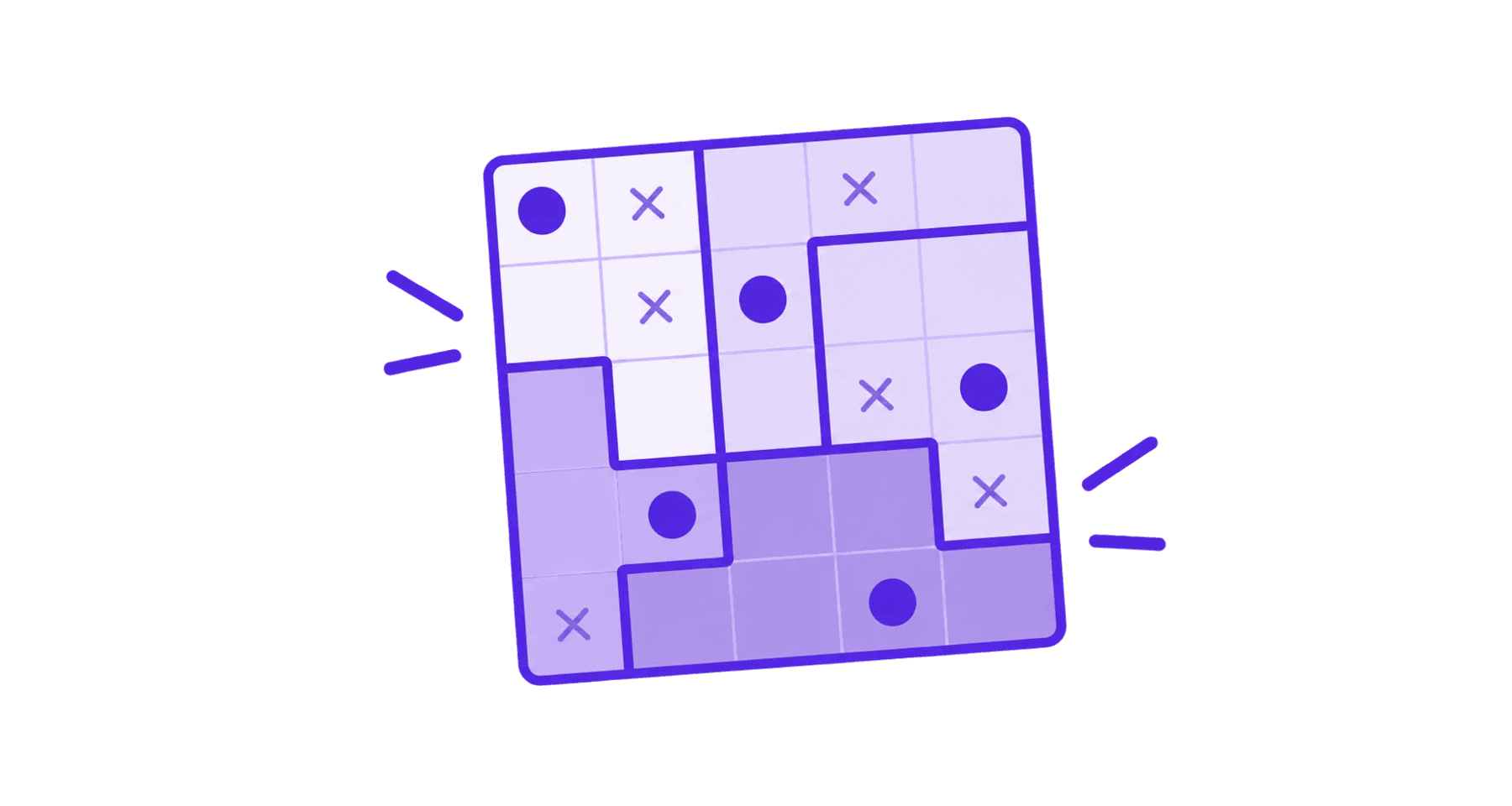
For a puzzle about positions in a row, the most useful layout is a table with one column per house and one row per category: colour, nationality, drink, smoke and pet. Fill in a cell when a fact is certain, and write the remaining possibilities in small letters when it is not. For puzzles with no positions, where the question is only which things belong together, the classic logic grid works better. It is a square of cells for each pair of categories, where you mark a cross when two things cannot go together and a tick when they must.
Either way, the grid does two jobs. It stops you holding everything in your head, and it makes the two basic deductions visible. The first is elimination: if four houses are ruled out for the dog, the dog is in the fifth. The second is exclusivity: once the dog is placed, no other house can have it, and nothing else can live with it.
A method that works on any of them
- Place the fixed facts first. Anything that names a house number, or the first or last house, goes in straight away.
- Use neighbour clues on the edges. A clue saying two things are next to each other is weak in the middle of the row but decisive at either end, where there is only one neighbour.
- Go back over every pairing clue after each new fact. A clue that was useless five minutes ago often becomes the next step once one of its two halves is placed.
- Look for a category with only one gap. When four of five drinks are placed, the fifth is decided, even if no clue mentions it. That is how water and the zebra are found.
Sooner or later most puzzles of this size reach a point where no clue gives a certain step. The honest way through is a case split. Pick a fact with only two possibilities, assume one of them, and follow the consequences. If they lead to a contradiction, such as two people needing the same house, the other possibility is true. Write the assumption down separately, so you can remove everything that followed from it if it fails.
When the grid is full, check it against every clue once more. In the 1962 puzzle the answer is that the Norwegian drinks water and the Japanese owns the zebra. A well-made logic puzzle has exactly one solution, so if your grid satisfies every clue, it is the answer, and if it breaks one, the mistake is in a step you took rather than in the puzzle.