What makes a good Wordle starting word
There is no first guess in Wordle that wins every game, and no opener that is the right choice for every player. What a first guess can do is collect as much information as possible about a word you know nothing about yet. Some words are much better at that than others, and the reasons are simple enough to use without a solver.
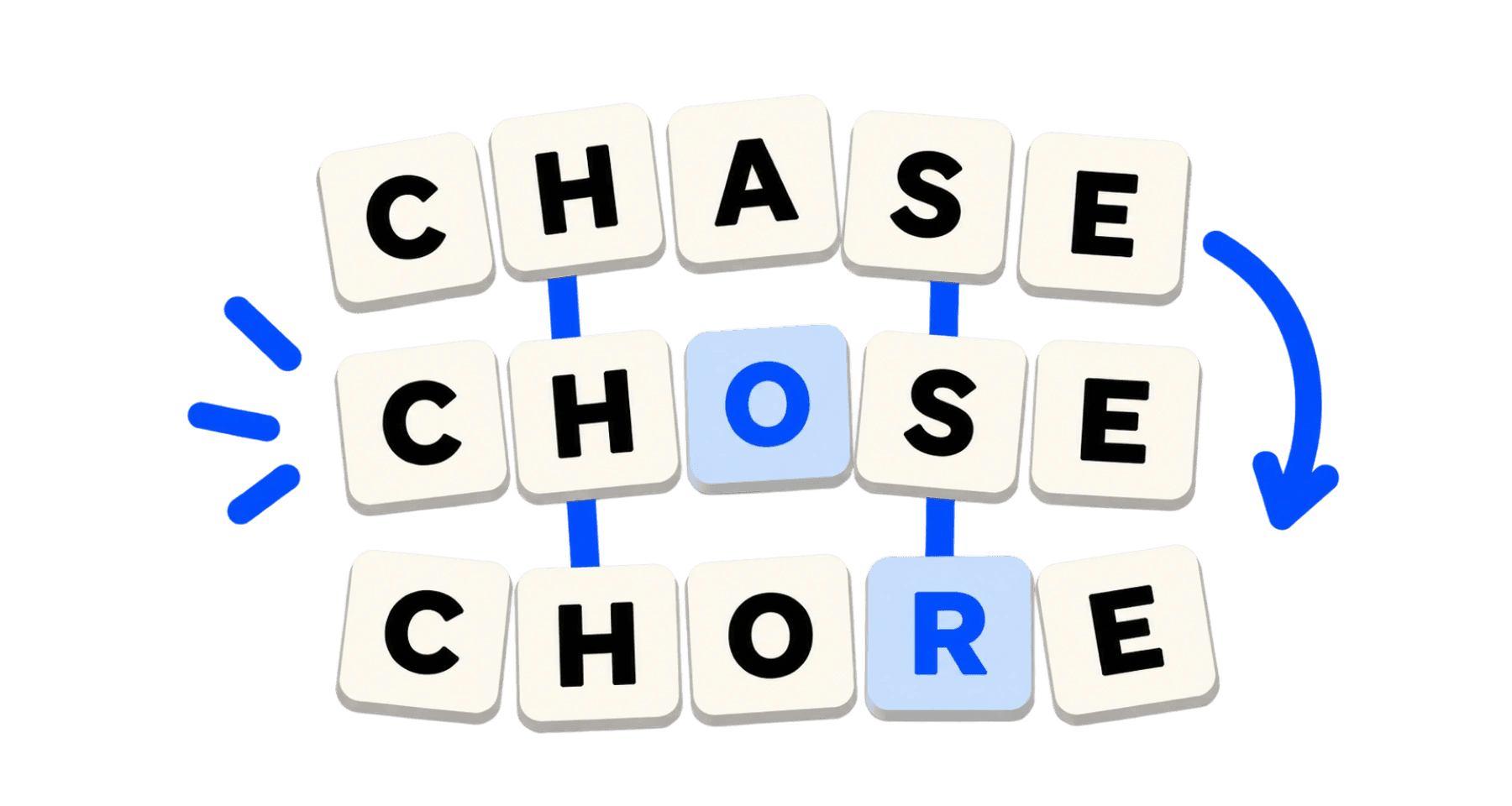
You have six guesses at a five-letter word. Each guess comes back with a colour on every letter: green for the right letter in the right place, yellow for a letter that is in the word but somewhere else, and grey for a letter that is not in the word at all. A good opener is one whose colours, whatever they turn out to be, cut down the list of possible answers as far as they can.
Common letters tell you the most
A grey letter is useful, but a green or yellow one is usually more useful, because it points towards the answer instead of away from a few candidates. Letters that appear in lots of five-letter English words are the ones most likely to light up. E, A, R, T, O, L, S, I and N turn up far more often than J, Q, X or Z, which is why so many popular openers, such as CRANE, SLATE, STARE and RAISE, are built almost entirely from that first group.
The same logic is why a repeated letter is a poor choice for a first guess. A word like SPEED spends two of its five slots on E, so it tests only four letters. Five different common letters tell you about five things at once.
Position matters as well as presence
Knowing that a word contains R is helpful. Knowing where the R sits is far more helpful, because it removes every candidate with an R somewhere else. This is where openers differ in a way that raw letter counts miss. Some letters have favourite positions: many English words end in E, Y, T or R, and many start with S, C, B or T. An opener that puts its letters where they commonly sit has a better chance of turning yellows into greens on the first go.
Plurals are a special case. S is very common at the end of five-letter words in general, but Wordle’s answers are chosen from a list of everyday words in which simple plurals are rare. A final S therefore tends to come back grey more often than its general frequency would suggest, and an S at the start of your guess usually does more work.
Vowel-heavy openers and their trade-off
Words such as ADIEU and AUDIO test four vowels in one guess. The appeal is clear: almost every answer contains at least one of A, E, I, O and U, so you are very likely to learn which vowels are in play. The cost is that vowels are only part of the picture. Once you know the word has an A and an E, you still have to find three or so consonants, and those are where most of the possible answers differ from each other.
An opener with two vowels and three common consonants, such as CRANE or SLATE, usually splits the answer list into more, smaller groups than a vowel-heavy one. That is the reasoning behind most solver recommendations. It does not make vowel-first openers wrong. If you find it easier to build words around known vowels, that ease counts for something in a game you play in your head.
Planning a second guess
Some players use a fixed pair of openers that share no letters, such as SLATE followed by CRONY. Between them they test ten different letters, and on many days that is enough to pin the answer down to a handful of words by the third guess. The drawback is that the second word ignores what the first one told you. If SLATE comes back with three greens, spending the next guess on five unrelated letters wastes information you already had.
A more flexible approach is to let the first result decide. If the opener finds little, a second word of fresh common letters is sensible. If it finds a lot, start using those letters in their possible positions. Hard Mode makes that choice for you, since any letter revealed as green or yellow has to be used in every later guess, so a player on Hard Mode has to think harder about which letters to test first.
Whichever word you choose, the most reliable improvement is consistency. Using the same opener every day means you learn what its patterns of colours usually mean, and reading those patterns quickly is worth more than the small differences between one good opener and another.